Tuesday, 26 June 2012

Reflection on the long haul

Living Streets King's Cross is a small local group which is campaigning in a strategically important inner area of London (with two local authorities) and works closely with the Living Streets London network for support. We recently had a walking meeting in Argyle Square, Argyle Street and Britannia Street with Tom Platt (Living Streets London Coordinator) and saw some work being done by residents to make Britannia Street more liveable.

Our local group has attended campaigners meetings in Wentworth Street over the last few years. During that time we have seen part of our area adopting a 20mph speed limit and - despite the government cuts - improving liveability of some of our local streets for walking and cycling.

Greg (chair) Photos by courtesy of Leah, local resident


Monday, 25 June 2012

King's Cross: Link or Place?

The Mayor of London, responding to the GLA's challenge prior to this year's election, has through Transport for London committed to investigating the potential redevelopment of the road layout around Kings Cross.

This is promoted as being to improve safety especially for pedestrians and cyclists, increase pedestrian permeability, enhance the urban realm, and reduce the traffic dominated ambience of the area. This includes the possible conversion of the one-way system to enable part, or full, two-way traffic operation.


The roads which form part of this study can be divided into three distinct one-way systems:
-          A501 Pentonville Road, Gray’s Inn Road, Acton Street, A201 Penton Rise, King’s Cross Road.
-          A5203 Wharfdale Road, Caledonian Road, York Way.
-          A5202 Pancras Road, Midland Road.
(King's Cross Environment)

It will be critically important to involve local people who live and work in the area - for example through a neighbourhood plan being developed under the Localism Act 2011 - to ensure that this development is one which regenerates the urban public realm.
There are tunnels already aplenty here from the last three centuries - the Fleet River, Metropolitan Line, the Piccadilly Northern and Victoria Lines, and the recent Northern Ticket Hall under the Western Concourse. Urban regeneration in this transport hub area, Kings Cross town centre, would be the ultimate wider benefit of this ostensible 'technical problem' of traffic management. Another road tunnel like that at Euston Circus to the west (or Munich City Ring) would be environmentally "regrettable".
A cleaner, walkable and more pleasant urban hub area and streetscape will be economically and socially stronger (enhancing, not harming, the station tenants' businesses). Balancing use of the public realm between motorised users and non-motorised users might be done by slowing all movement to walking pace, restoring the urban and civic value and appeal of the area.

(Emerging from continental Europe to King's Cross in 2020, one will simply walk across to 'Play 2 Win' for a game of billiards at 1 Euston Road through gaps in the trees, between cafe tables in the sun and crawling traffic on the square!)

Monday, 28 May 2012

High Street Camp

The 'High Street Camp' at Willesden Library last week suggested that public realm design in the town centre could be regenerated and revived. This might be done with (old and) new ways of facilitating social interaction and (safer, slower) use of the high street.

The day brought together street design and regeneration interests from all corners, and Mary Portas popped in to chat. (It was suggested to her that the built environment was under-emphasised in her Review) Government 'Communites' funding has been announced for ('riot-stricken') Croydon as the only 'Portas Pilot' project in London.

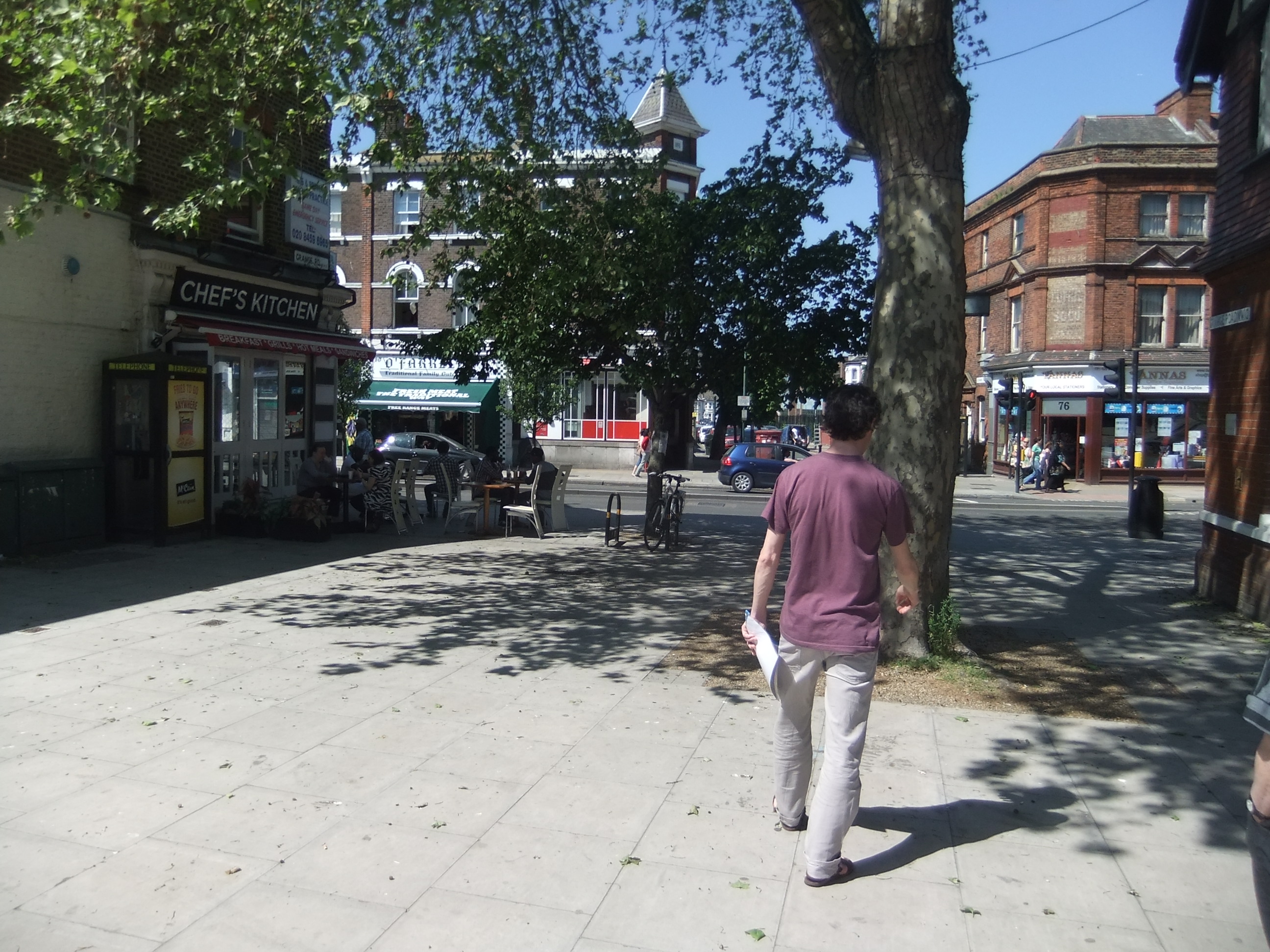
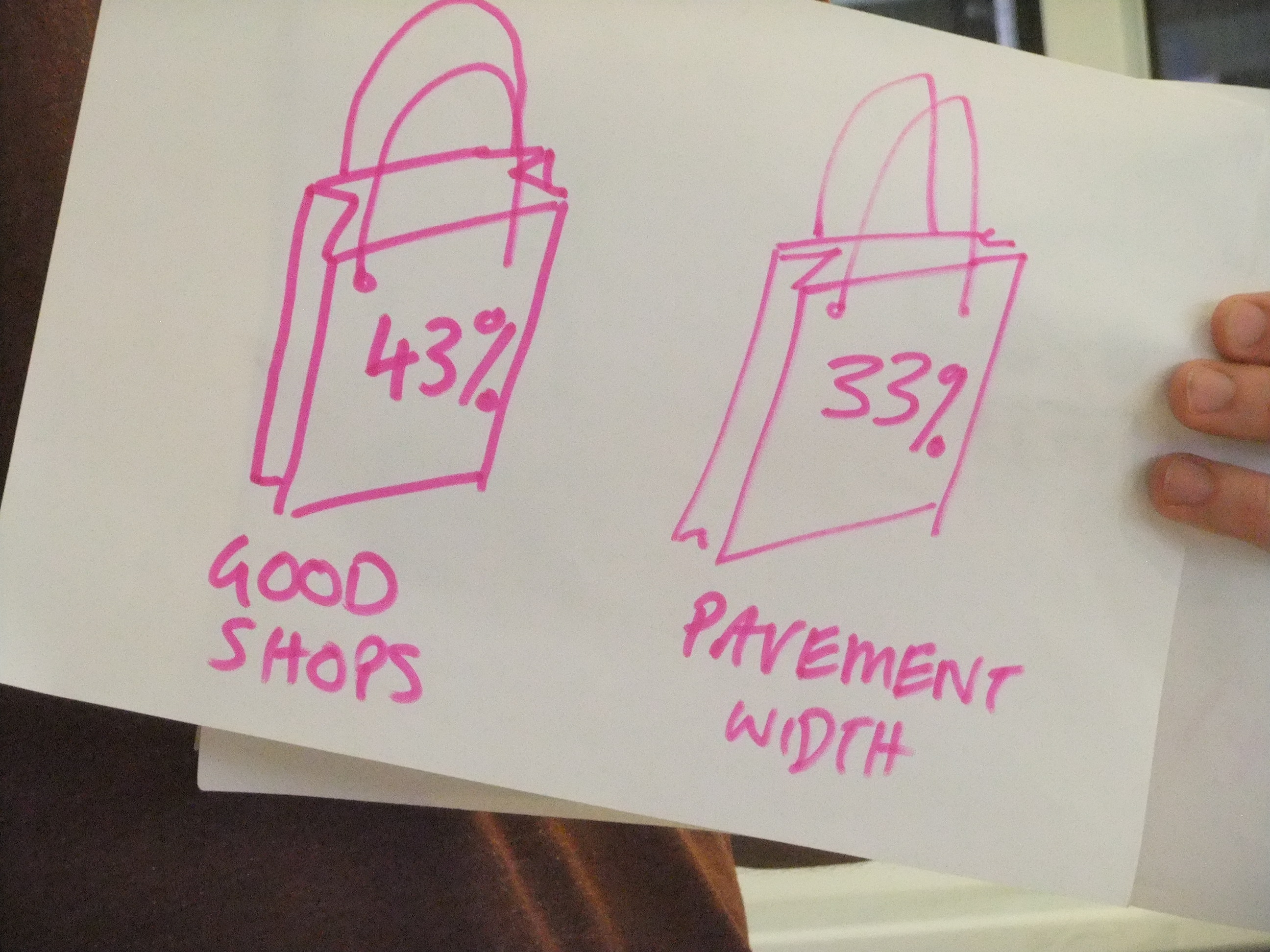
A presentation by Living Streets' Jack Skillen suggested that economic vitality in streets was a key factor in making them work well, but also the activity and transparency of 'good' shops make a conducive built environment. In the case of the centre of King's Cross, for example, we might say that the Post Office (17 Euston Rd) and Megaro (23 Euston Road) - with their active frontages - contribute more to the street and public realm than 'Play 2 Win' at 1 Euston Road, or William Hill opposite. 

Here is my response to the feedback request from High Street Camp:
1 Overall, what was your impression of the event?
It was a lively, well-organised day, allowing a useful exchange of case studies and a diverse range of interests and networking contacts.
2 What, for you, was the highlight of the day?
The highlight for me was visiting Queens Parade to see a regenerated street frontage accommodating pop-up small enterprises including a print shop, vintage shop and juice bar.
3 What could we do better if we were doing another High Street Camp?
I found the balance of my time about right and the flexibility of participation appropriate. I can't think of any improvement, apart from holding one in future in my neighbourhood of King's Cross.. (13miles by cycle eastward on the Regent's Canal)
4 Could you pick one idea from the event that you hope or plan to follow up?
Its ambitious, but would like to get develop the idea of high streets' roles in urban regeneration of King's Cross Town Centre in our Neighbourhood with local Boroughs (Camden and Islington) and Transport for London Streets!


Punch and Juicy (r) before

Julian Dobson on High Street Camp in the Huffington Post
The ReviveOurTownCentres site.

Greg Cowan, local group chair

Friday, 23 March 2012

King's Cross Neighbourhood Forum

King's Cross Neighbourhood Forum will form by the end of this month- this was agreed last night by about twenty people who live and/or work in the King's Cross area, who met at Camden Town Hall with KXDF. Each member of this new steering group was willing to outline their interest in collaborating in planning for this distinctive and complex mixed-use area in central London. The Neighbourhood Forum would develop a Neighbourhood Plan for the future development of the newly defined King's Cross Neighbourhood Area, which incorporates an area of about a mile radius around the stations with about 20 000 residents (see below).

The Neighbourhood Form, once approved under the Localism Act 2011, would have powers to guide the local Boroughs of Camden and Islington and develop the area according to its own five-year Neighbourhood Plan. The emphasis would be on planning by residents, local workers and people who run small and medium enterprises and who use the area on a day to day basis. The Forum would make use of local resources and local professional services (eg. like this).

The main appeal to me is that the Neighbourhood Forum would be funded and supported by central government to work hyper-locally with the boroughs. The relationship of the Forum with relevant local Ward Councillors and with other authorities like Transport for London would need to be carefully managed. The new Forum's Neighbourhood Plan would be able to incorporate or guide some of the work being developed by the boroughs like the Caledonian Road Scheme (Cr Convery) and the King's Cross Place-Shaping Scheme (Cr Hayward) and the Kings Cross Site Allocations 1-8 just released. Local planning may even affect Transport for London ... (see note 456)

Draft Constitution and Application (15 Mar)

Greg C. (chair)


View districts (populations) in a larger map

Saturday, 25 February 2012

Exhibition Road 25 Feb 2012


See my Flickr photos here
http://www.flickr.com/groups/streetdesign/