Monday, 28 May 2012

High Street Camp

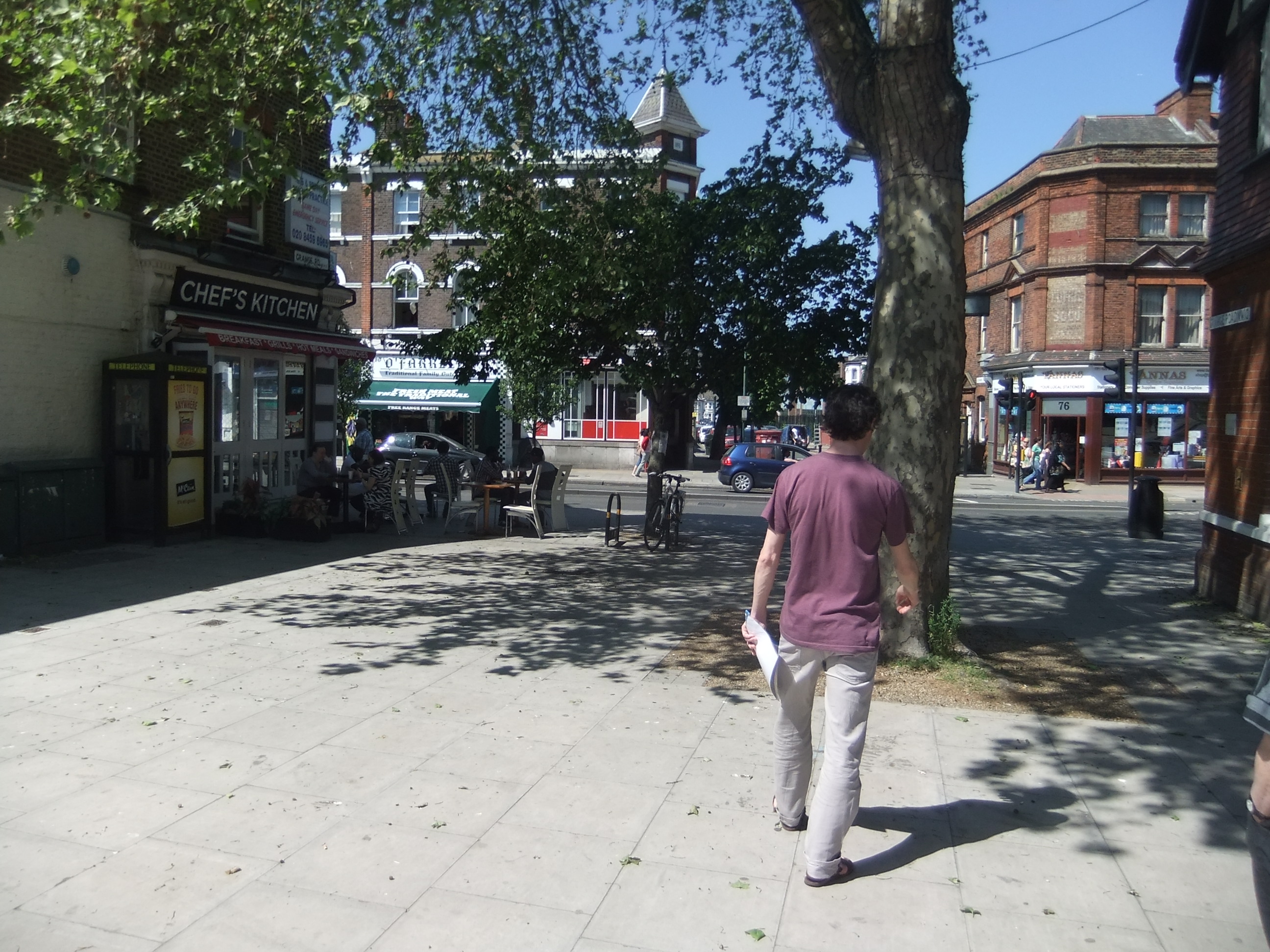
The 'High Street Camp' at Willesden Library last week suggested that public realm design in the town centre could be regenerated and revived. This might be done with (old and) new ways of facilitating social interaction and (safer, slower) use of the high street.

The day brought together street design and regeneration interests from all corners, and Mary Portas popped in to chat. (It was suggested to her that the built environment was under-emphasised in her Review) Government 'Communites' funding has been announced for ('riot-stricken') Croydon as the only 'Portas Pilot' project in London.
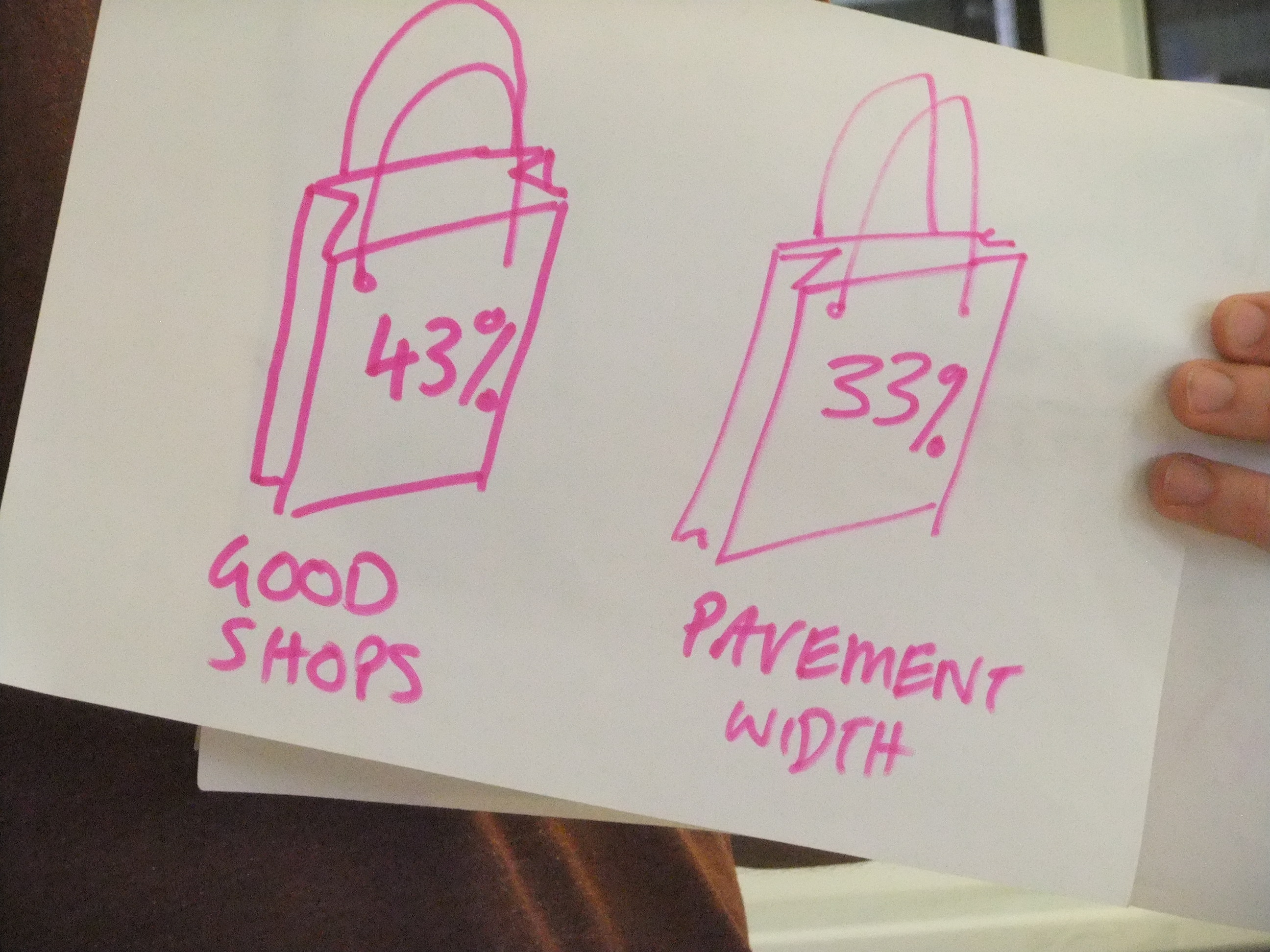
A presentation by Living Streets' Jack Skillen suggested that economic vitality in streets was a key factor in making them work well, but also the activity and transparency of 'good' shops make a conducive built environment. In the case of the centre of King's Cross, for example, we might say that the Post Office (17 Euston Rd) and Megaro (23 Euston Road) - with their active frontages - contribute more to the street and public realm than 'Play 2 Win' at 1 Euston Road, or William Hill opposite. 

Here is my response to the feedback request from High Street Camp:
1 Overall, what was your impression of the event?
It was a lively, well-organised day, allowing a useful exchange of case studies and a diverse range of interests and networking contacts.
2 What, for you, was the highlight of the day?
The highlight for me was visiting Queens Parade to see a regenerated street frontage accommodating pop-up small enterprises including a print shop, vintage shop and juice bar.
3 What could we do better if we were doing another High Street Camp?
I found the balance of my time about right and the flexibility of participation appropriate. I can't think of any improvement, apart from holding one in future in my neighbourhood of King's Cross.. (13miles by cycle eastward on the Regent's Canal)
4 Could you pick one idea from the event that you hope or plan to follow up?
Its ambitious, but would like to get develop the idea of high streets' roles in urban regeneration of King's Cross Town Centre in our Neighbourhood with local Boroughs (Camden and Islington) and Transport for London Streets!


Punch and Juicy (r) before

Julian Dobson on High Street Camp in the Huffington Post
The ReviveOurTownCentres site.

Greg Cowan, local group chair

Friday, 23 March 2012

King's Cross Neighbourhood Forum

King's Cross Neighbourhood Forum will form by the end of this month- this was agreed last night by about twenty people who live and/or work in the King's Cross area, who met at Camden Town Hall with KXDF. Each member of this new steering group was willing to outline their interest in collaborating in planning for this distinctive and complex mixed-use area in central London. The Neighbourhood Forum would develop a Neighbourhood Plan for the future development of the newly defined King's Cross Neighbourhood Area, which incorporates an area of about a mile radius around the stations with about 20 000 residents (see below).

The Neighbourhood Form, once approved under the Localism Act 2011, would have powers to guide the local Boroughs of Camden and Islington and develop the area according to its own five-year Neighbourhood Plan. The emphasis would be on planning by residents, local workers and people who run small and medium enterprises and who use the area on a day to day basis. The Forum would make use of local resources and local professional services (eg. like this).

The main appeal to me is that the Neighbourhood Forum would be funded and supported by central government to work hyper-locally with the boroughs. The relationship of the Forum with relevant local Ward Councillors and with other authorities like Transport for London would need to be carefully managed. The new Forum's Neighbourhood Plan would be able to incorporate or guide some of the work being developed by the boroughs like the Caledonian Road Scheme (Cr Convery) and the King's Cross Place-Shaping Scheme (Cr Hayward) and the Kings Cross Site Allocations 1-8 just released. Local planning may even affect Transport for London ... (see note 456)

Draft Constitution and Application (15 Mar)

Greg C. (chair)


View districts (populations) in a larger map

Saturday, 25 February 2012

Exhibition Road 25 Feb 2012


See my Flickr photos here
http://www.flickr.com/groups/streetdesign/

Thursday, 9 February 2012

King's Cross Neighbourhood Forum

A meeting today decided to form a King's Cross Neighbourhood Forum, which would be authorised to develop a 'Neighbourhood Plan' under the Localism Act 2011. This Neighbourhood Forum, once approved, would develop a vision for the future of the King's Cross area covering the same area as the 'Placeshaping Area' of King's Cross - across the Boroughs of Camden and Islington and TfL roads, focusing on the transport hub at King's Cross-St. Pancras.

The chair of the King's Cross Development Forum undertook that his coordinating group would submit a bid under the new Act to form a resourced Neighbourhood Forum for King's Cross, with a constitution and with at least 21 local members who live or work in the area. If you live and work locally, please feel free to join the forum and make yourself known to me or Hugh at KXDF.

At the meeting, I also saw plans drawn by (film educationist) Jeremy Ross, former Stanle Building resident, which demonstrate how to remove the King's Cross One-Way Traffic System (the 'Gyratory'), which will be of interest to Bikes Alive and other local groups and activists. Jeremy kindly offered to make copies of the plans for us in future.

From the meeting: Audioboo soundclips from Meeting Room 2 at Camden Town Hall tonight:

KX Neighbourhood Forum (mp3)

KX Neighbourhood Forum 2 (mp3)

KX Neighbourhood Forum 3 (mp3)

KX Neighbourhood Forum 4 (mp3)

KX Neighbourhood Forum 5 (mp3)

For the Gyratory-lovers, a sound clip from Monday evening...

Greg C

Monday, 30 January 2012

King's Cross Development Forum 9 February

King's Cross Development Forum is a long established local group which is considering becoming officially constituted as a Neighbourhood Forum under the new Localism Act 2011. Planning structures are changing and resources are scarcer, and local government capacity is increasingly challenged under the new funding regime. A process of working with KXDF may be one effective way to work locally for safer and more pleasant streets where we live and work in the King's Cross area.

Advantages may be
- a better more cogent and more traceable line of communication on local issues.
- the appearance, at least, that local groups are better heard or more comprehensively and responsibly consulted by local government.

Disadvantages may be
- a tendency for local government skills and capacity previously used in responding to change being transferred to the voluntary sector - ie unpaid/retired/voluntary interests usurping the work (and expertise) of skilled council officers.
- a possibility that resources are not available to carry out well-intentioned community improvements.

Attending the meeting on 9 February would be a way to further investigate the possibilities.
 
Meanwhile, David Engwicht posits some DIY tools and strategies to bring the environment back to being a social space:
Wave to motorists. (Shaking your fist just tells them to go faster.)
Put something intriguing in the street.
Encourage local businesses to connect with the street by placing an activity or linger node outside their premises.

GC